
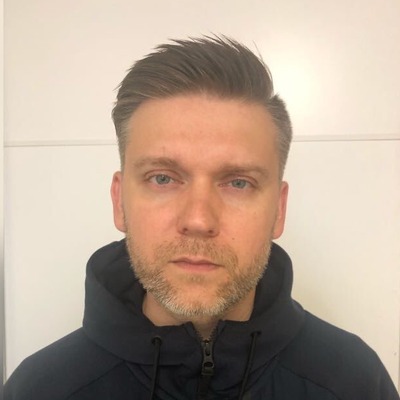
Vlad
CEO
22+ years in AI, ML and data platforms. Has led CTOships and engineering teams, shipped OSS into Google ML Core, and ran Linux Foundation Edge (EVE / Eden). Earlier Principal engineer at EMC. Former 500 Startups and Antler ecosystem.




Provethenscale
We invest our own product and engineering capacity in startups where demand exists, but execution is slowing the company down.
For companies we select, we invest for 1–2% equity instead of cash.
We agree on the outcome, not a fixed feature list. We do not sell developer hours.
You sell. We build. You preserve runway.
Before product-market fit, building a permanent engineering organization converts flexible capital into fixed burn. We help delay that commitment until customer traction justifies it.
We invest only where execution is the constraint. We do not fund engineering in search of demand.
For founders
We work with startups where demand exists, but engineering execution is slowing the company down. We invest in getting your prototype, demo or early product to a defined production milestone.
If your product were production-ready tomorrow, would you know who to sell it to? If yes, we may be a fit.
Every engagement starts with a clear business objective and a concrete delivery milestone. The implementation can change as customer evidence changes.
You do not manage our team. You do not need to write detailed specifications, manage developers or run engineering meetings. We work async by default.
You receive concise updates on: shipped / in progress / blocked / decisions needed.
Example
A customer says: “We need SSO before we can launch the pilot.”
You bring us the commercial signal. We figure out how to solve it and get it shipped.
The main engagement ends when the agreed delivery milestone is reached. We then stay involved for an agreed post-launch support period.
Support is attached to the delivered product: production issues, maintenance, bug fixes and minor changes while you validate with customers. It is not unlimited future product development.
A substantial new capability, major product direction or new business objective becomes a new engagement. When traction justifies an internal engineering team, you can take the product in-house.
Your company owns all code, repositories, infrastructure, data and IP from day one. There is no technical lock-in.
Because we take equity, our upside depends on helping the company reach real customer use and commercial traction — not on maximizing the amount of work we perform.
Equity
We are not a traditional venture studio.
We do not create the company, hire the founding team, provide office infrastructure, run fundraising or operate the business on the founder’s behalf.
We enter later, when there is already a founder, a market thesis, customer evidence and usually a prototype or early product.
Our job is narrower:
remove the product and engineering bottleneck between demonstrated demand and production.
That allows us to work with a much smaller senior team, use AI-native engineering heavily, and invest execution capacity across multiple companies.
We take less equity because we take on a more focused role.
The founder builds the company and the market. We make sure engineering does not consume the runway before the market is proven.
Also available
Yes, in some cases. We offer a limited number of fixed-price cash engagements for clearly defined outcomes.
These are priced at a premium because we do not participate in the company’s upside.
We do not provide staff augmentation or sell developer capacity. Cash engagements are fixed-price against a defined delivery or business objective — not open-ended developer hours.
For funds
We identify portfolio companies where engineering execution, not demand, is the bottleneck. For selected startups, we invest our own product and engineering capacity to take them from prototype or demo to production.
If the product were production-ready tomorrow, would the founders know who to sell it to? If not, more engineering is probably not the right investment.
We review a small set of portfolio companies and independently decide where our engineering capacity can create enough impact to justify investment.
There is no cost or commitment for the fund.
Our goal is to help selected companies reach customer validation, deployment, revenue or the next financing milestone before permanent engineering burn becomes necessary.
Who we are
Small partner team. We put our own engineering into selected companies — the same people who have built production systems at places you already know.
CEO
22+ years in AI, ML and data platforms. Has led CTOships and engineering teams, shipped OSS into Google ML Core, and ran Linux Foundation Edge (EVE / Eden). Earlier Principal engineer at EMC. Former 500 Startups and Antler ecosystem.
CTO
20+ years as architect and platform engineer. Owns how the product gets built: data platforms, LLM / RAG stacks, multi-tenant SaaS, and getting it into production. Principal / Solutions Engineer at EMC; earlier at Alcatel-Lucent.



DevOps & Partner
Keeps production standing: infrastructure, databases, reliability under real load. Staff DBRE at Bolt. Before that — Oracle MySQL support, SAP, T-Systems. MySQL, TiDB, AWS, automation, high availability.




Why this model
Provethenscale is unusual on purpose. We put our own product and engineering economics at risk alongside the company, instead of converting your runway into our billable hours.
FAQ
For companies we select for Provethenscale, we typically invest our product and engineering execution in exchange for 1–2% equity.
The exact percentage depends on the starting point, delivery objective, execution risk and expected post-launch involvement.
Yes, in some cases. We offer a limited number of fixed-price cash engagements for clearly defined outcomes.
These are priced at a premium because we do not participate in the company’s upside.
A company may still be a good client even if it is not a good investment for us.
If the problem is well-defined and we believe we can deliver the outcome, we may offer a fixed-price cash engagement instead — subject to capacity, and priced at a premium because there is no equity upside.
Not for product and engineering delivery.
We do not sell developer hours or staff augmentation. We agree on a defined delivery milestone or business objective and price the engagement around that result — whether equity or cash.
Because we are putting our own product and engineering economics at risk instead of consuming your cash.
The model is designed for companies where preserving runway and reaching production faster is more valuable than prematurely building a permanent engineering organization.
If you prefer to keep equity, a limited number of premium fixed-price cash engagements may be available instead.
Because we are not building the company from scratch.
We work with founders who already have the company, customer evidence and a clear market opportunity.
We focus on one thing: getting the product from its current state to production and supporting early customer use.
A focused scope, senior team and AI-native execution let us make that economics work at 1–2% equity.
We can include a founder-friendly buyback option under agreed terms. The exact structure depends on the company and is defined before the engagement begins.
Yes. Some engagements may make more sense with a hybrid structure, particularly where the delivery scope or ongoing support requirements are unusually large.
We agree on the outcome, not a frozen feature list.
For example: “Make the current product ready for production deployment with our first enterprise pilot.”
The implementation may change as we learn from customers, technical constraints and actual usage.
Typically a few months from prototype or early product to the agreed production milestone. The actual duration depends on what already exists and what is blocking real customer use.
That is normal.
Customer feedback, lost deals, pilot requirements and commercial priorities are inputs into execution. If the implementation changes while pursuing the same business objective, we adapt.
If the company moves toward a materially different objective or product, we define a new engagement.
We stop and reassess. Our original investment decision was based on a particular company, demand signal and business objective. A major pivot is treated as a new investment decision rather than unlimited continuation of the original agreement.
We stay involved for an agreed post-launch support period. That typically covers production issues, maintenance, bug fixes and minor changes within the delivered product while you validate it with customers.
A substantial new capability, major product direction or new business objective is a new engagement. Support is not unlimited future development.
No. You give us business context, customer signals and priorities. We take responsibility for turning those into product and engineering execution.
You should not need to write detailed specifications, manage tickets or run engineering meetings.
We work async by default. Async communication related to the engagement is included.
Up to 2 hours of synchronous meetings per month are included. Additional meetings, workshops or synchronous advisory are $250/hour.
The purpose is not to prevent communication. It is to avoid turning product execution into a calendar-management exercise.
Yes, when technical involvement can materially help a pilot, deployment or commercial decision. These calls count toward the included synchronous meeting time.
That is not a problem. We can work alongside an existing technical team when there is a clear delivery objective and additional execution can materially accelerate production or revenue. We do not need to replace your CTO.
The founder owns product vision, customers, commercial priorities, pricing and company strategy. We take responsibility for execution.
You tell us that three enterprise prospects require SSO. You do not need to design the authentication architecture or manage the engineers implementing it.
Your company does from day one. You own the source code, repositories, cloud accounts, infrastructure, data and IP. There is no proprietary platform dependency required to continue operating the product.
Yes. The model is specifically designed for that. When traction justifies building your own permanent engineering organization, your team can take over the product.
No. The company owns the product and infrastructure, and the engagement has an agreed delivery objective and support period. We are not trying to become a permanent outsourced engineering dependency.
The strongest candidates typically have:
Our basic test: If your product were production-ready tomorrow, would you know who to sell it to? If not, more engineering is probably not the right investment yet.
We are generally not a fit if you are still searching for the customer problem, primarily want developer capacity, or need engineering without a defined commercial or delivery objective.
We invest where execution is the constraint. We do not fund engineering in search of demand.
No. It means we do not currently see a Provethenscale investment case. The company may be too early, already sufficiently staffed, constrained by GTM rather than engineering, or — in some cases — better suited to a premium fixed-price engagement.
Ask one question: If the product were production-ready tomorrow, would you know who to sell it to?
If the answer is clearly yes and engineering is what stands between you and those customers, the conversation is worth having.
Tell us about the company, the customer signal, and the engineering barrier in the way.
Get in touch